


News & Blog
Energy Today: How the World Powers Itself — And What Comes Next
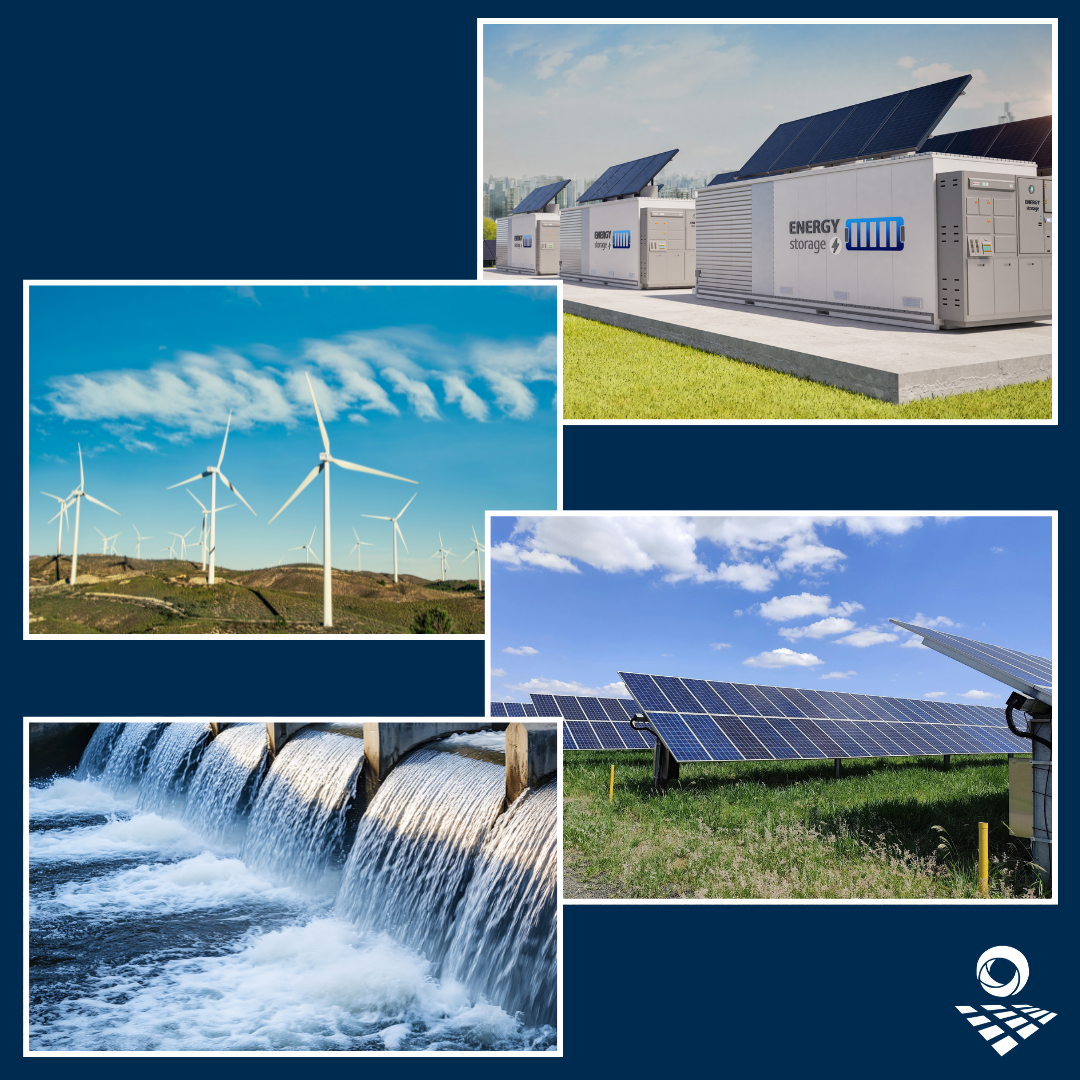
A neutral, data-grounded look at fossil fuels, renewables, costs, history & the future of energy.
Energy shapes civilization. It fuels transportation, lights homes, powers industry, and drives every technological advancement of the last 200 years. Yet how we generate that energy — and how much it costs — varies widely across the world.
With National Cut Your Energy Costs Day celebrated this month, consumers and businesses are thinking more about energy efficiency, but understanding efficiency requires first understanding the sources themselves — where they came from, what they cost, why we still use them, and how their role may change in the future.
Rather than focusing only on energy-saving tips, this article looks at the full landscape — fossil fuels, solar, wind, hydroelectricity, geothermal and biomass — their history, real-world price ranges, advantages, disadvantages, and where energy may be heading in the next 10–50 years.
🔥 Fossil Fuels
Energy of the Industrial Revolution through today
Coal, oil, and natural gas have powered society for more than a century. Coal ignited the Industrial Revolution in the 1700s, driving steam engines that changed transportation, manufacturing, and globalization. Oil surged into dominance in the 1900s, fueling automobiles and aviation. Natural gas, once considered a mere byproduct, evolved into one of the world’s leading electricity sources due to cleaner combustion and favorable pricing.
Today, fossil fuels still supply the majority of global power — particularly for grid-stable baseload energy.
Approximate cost range:
- Natural gas (existing power plants): $24–$39/MWh
- Natural gas (new plants): $48–$109/MWh
- Coal: typically more expensive to build new; often less competitive than renewables
Why they’ve dominated for so long
Fossil fuels are easy to transport, store, and burn on demand — making them dependable for large populations. They can run day or night, rain or shine. And because the infrastructure already exists, continuing operation often remains inexpensive.
Why reliance is shifting
Burning fossil fuels releases greenhouse gases and particulate pollution. Coal in particular is being phased out in many regions due to emissions and cost-competitiveness challenges. The resource itself is finite — extraction becomes harder over time — and price volatility tied to global markets introduces risk. As cleaner alternatives become cheaper, fossil fuels face economic pressure like never before.
🌞 Solar Energy
From 19th-century discovery to one of the fastest-growing energy sources on Earth
Solar power isn’t new. French physicist Edmond Becquerel first discovered the photovoltaic effect in 1839, but it took more than 100 years for researchers to convert that discovery into functional electricity. Early solar cells powered satellites and niche equipment — expensive, limited, and experimental.
Then costs fell. Engineering improved. Silicon processing scaled. And over the last two decades, solar has transformed from specialty technology into mainstream global power.
Average solar electricity cost today:
$38–$78/MWh (utility-scale solar PV)
Why solar has accelerated so quickly
Sunlight is infinite on a human timescale. Panels require little maintenance. Installing solar does not require fuel mining, pipelines, or combustion-based engines — just space, hardware, and sunlight.
But even solar has limitations
Solar power fluctuates with weather, season, and time of day. While battery storage has become increasingly accessible, the cost of solar-plus-storage systems remains higher than stand-alone generation. Land area can be a constraint, especially for utility-scale arrays.
Still, solar has reached cost parity with fossil fuels in many regions. Its scalability — rooftop, farm, microgrid, utility networks — positions it as one of the most versatile energy sources of the next century.
🌬 Wind Energy
A technology thousands of years old — now powering modern grids
Wind power predates electricity. Ancient civilizations used wind to grind grain and propel ships. The first wind turbine to generate electricity appeared in Scotland in 1887 — a small machine lighting a home. Over the following century, designs radically evolved into megawatt-scale systems standing hundreds of feet tall.
Today, wind is not only viable — it’s among the lowest-cost forms of new energy generation.
Typical wind cost range:
$24–$75/MWh (onshore wind)
Wind turbines generate power whenever the air moves. No combustion. No emissions. Operating costs remain low after construction, making wind economically attractive for large-scale generation.
Its challenges:
Wind varies seasonally and by geography. It may produce too much power some days and none on others. This intermittency requires balancing with other energy sources or storage to create grid reliability. Transmission infrastructure — moving wind power across long distances — also represents a critical investment barrier.
Still, in windy regions of the U.S., wind is one of the most affordable and cleanest sources available.
💧 Hydroelectric Power
Centuries old — and still one of the most reliable renewables
Hydropower converts the movement of water into electricity — a concept used mechanically for centuries, but electrified in 1882 at Wisconsin’s Vulcan Street Plant, America’s first hydroelectric facility.
Dams, run-of-river systems, and pumped storage projects now supply consistent renewable energy across the globe.
Strengths of hydroelectricity
Hydro is more stable than wind or solar because rivers don’t stop flowing at sunset. Many facilities can quickly adjust output, helping balance grid fluctuations. Once built, hydro generation costs stay low for decades.
Limitations
Dams reshape ecosystems, affect fish migration, and can displace communities. Hydropower is geographically restricted — you can’t build a river where one doesn’t exist. Large infrastructure requires long development timelines and high upfront cost.
Even so, hydro remains a backbone renewable for countries with suitable waterways.
🌱 Geothermal & Biomass
Earth-generated heat and organic fuel cycles
Geothermal energy taps natural heat beneath Earth’s crust. Geological hotspots — Iceland, California, parts of the Pacific Rim — can generate 24/7 electricity with near-zero carbon output. Reliability is geothermal's greatest advantage, but its limitation is geology: not every region has accessible heat reservoirs.
Biomass uses organic materials — wood, agricultural waste, engineered biofuels — to produce electricity. It’s renewable as long as supply is sustainable, but combustion still produces emissions, making biomass a transitional rather than fully carbon-free solution.
Both sources play a role in diversified energy systems, particularly in regions where wind or solar output fluctuates.
🔮 Where Energy Is Heading Next
Not a single winner — but a blended global grid
The future of energy will likely look less like one dominant technology and more like a symbiotic mix:
- Solar for daytime generation
- Wind for storm seasons and coastal corridors
- Hydro for reliability and grid balancing
- Geothermal where earth’s heat is accessible
- Storage and hydrogen to fill the gaps
Battery technologies are rapidly advancing. Microgrids are emerging for communities and businesses seeking resilience. Renewable adoption is rising not only for environmental reasons — but because costs have become economically compelling.
The core shift isn’t just technological; it’s strategic. Nations, homeowners, and industries are no longer asking if renewable energy works — but how quickly we can scale it.
Final Thought
Energy production is evolving more quickly now than at any point in modern history. Fossil fuels powered the world for a century — and still play a pivotal role — but renewables are accelerating into the mainstream with cost competitiveness, scalability, and innovation.
The question shaping our future isn’t whether energy will change —
it’s how boldly we will shape the next era of power.