


News & Blog
Trees, Carbon, and Solar: How Renewable Energy Supports Forest Conservation
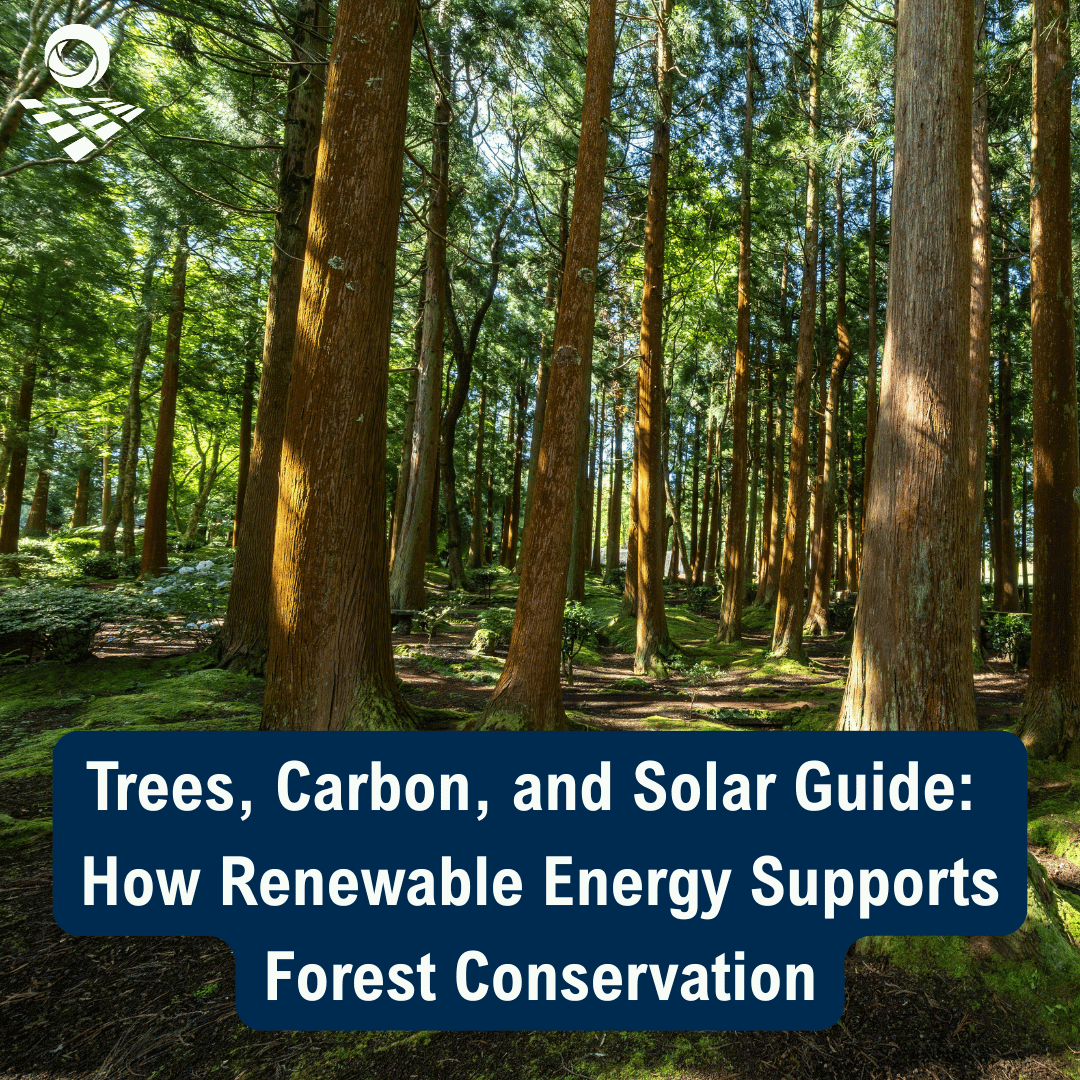
The Land Use Question Developers Can't Skip
A mature forest stand holds a significant amount of carbon in its trees, root systems, and soil. Clearing that stand to install a solar array creates a carbon debt on day one, one that takes years of displaced fossil-fuel emissions to repay. The array still delivers a climate benefit over its lifetime, but the payback timeline changes considerably depending on what was on the land before the panels went in.
This is why the siting conversation has to happen before the technical design conversation. The same racking system, the same modules, and the same electrical design can produce very different outcomes for a piece of land depending on where that project is placed.
Why Site Selection Matters More Than the Hardware
Across the installer network SFUSA works with, the strongest projects tend to start with a simple filter: look for land that isn't doing much carbon or ecological work already. Degraded pasture, capped landfills, gravel pits, low-yield agricultural parcels, and other previously disturbed sites are strong candidates for ground mount solar because building there doesn't require trading one carbon sink for another.
Forest-adjacent or forested parcels aren't automatically off the table, but they warrant a closer look at tree cover, soil type, and whether a smaller footprint or alternate layout on the same property could avoid clearing altogether. Treating forest proximity as a site-design constraint, rather than something to deal with after a layout is finalized, tends to produce better outcomes for everyone involved.
How Racking Design Affects What Happens to the Land
Site impact isn't only a function of where a project goes. It's also a function of how it's built once the location is chosen. SFUSA's ground screw racking systems are driven into the ground rather than requiring extensive excavation, which limits disturbance to topsoil, root structures, and natural drainage patterns compared to more invasive installation methods.
That matters for what happens underneath and around the array after installation. Ground mount layouts that preserve topsoil and drainage make it realistic to maintain ground cover, native grasses, or pollinator-friendly plantings on site, rather than leaving disturbed, compacted ground behind. Across more than 10,000 rack installations, the SFUSA field team has seen firsthand how these site-prep decisions carry through into the long-term condition of the land, long after the array is generating power.
Two Kinds of Carbon Benefit, Not One
It's worth separating the two benefits clearly. Avoided emissions come from generating electricity without burning fossil fuel. Carbon storage comes from vegetation and soil that stay intact and keep doing what they already do well. A well-sited ground mount array on non-forested land captures the first benefit without giving up the second. A poorly sited one can end up trading a working carbon sink for a project that still takes years to offset the loss.
Neither benefit cancels the other out, and neither one is a substitute for good site selection. The strongest projects are the ones that don't have to choose between them in the first place.
What This Looks Like in the Field
For installers evaluating a new site, that generally means walking the property with tree cover, soil condition, and drainage in mind before finalizing a layout, checking whether a smaller or reconfigured array footprint can avoid clearing mature stands, and choosing racking and foundation methods that limit soil disturbance during and after construction. None of this changes the fundamentals of a ground mount project. It changes which parcel gets used and how carefully the build accounts for what was already there.
Solar and forest conservation aren't in competition. They only end up in tension when siting is treated as an afterthought. With the right site selection and the right build approach, a ground mount project can add clean generation capacity without asking a forest to pay for it.